
Perspectives · Climate Change
![Five Reasons Why AI is Not a Replacement for Project Managers [It is a tool].](/images/perspectives-cards/five-reasons-ai-not-replacement-project-managers.png)
Perspectives · Perspectives
AI is one of the most talked about advancements, and everyone has an opinion on the future. Today, I want to dive in on what has been on my mind regarding the role of Artificial Intelligence (AI) in project management. There's been heaps of buzz around AI taking over jobs across various industries, and project management is no exception. However, I firmly believe AI is here to boost our capabilities as project managers, NOT replace us. In this blog post, I will explain, from my perspective, why AI will be a powerful tool to make project managers more efficient and practical but not obsolete.
AI has come a long way in recent years, actually recent months... but there's one aspect that it simply cannot replicate: human intuition and creativity. Project managers can think outside the box, develop innovative solutions, and adapt to unexpected challenges. While AI can help automate tasks and analyze data, it cannot generate creative ideas or make judgment calls based on experience and intuition.
It is also critical to note that project managers must often navigate intricate interpersonal relationships among stakeholders. This requires empathy, understanding, and the ability to manage emotions - qualities distinctly human and impossible for AI to emulate. Due to this, anyone who says that AI will take on more than half of a PM's role needs to re-evaluate their competence.
• AI has no emotional or social awareness to engage stakeholders. • AI is unable to drive collaboration • AI is incapable of using Communication skills that connect hearts and minds These three abilities are what separate a task manager from a project manager.One of the main goals of AI is to enhance human capabilities, not replace them. In project management, AI can automate repetitive tasks, analyze large amounts of data, and provide insights that would otherwise be impossible for humans to discern. This enables project managers to focus on more strategic and high-level aspects of their job, such as building relationships, crafting innovative solutions, and driving overall project success.
For instance, AI-powered tools can help project managers identify trends and patterns in project performance data which can be used to optimize processes and improve efficiency. Additionally, AI can assist in resource allocation and scheduling by analyzing historical data and predicting future needs. These capabilities allow project managers to make more informed decisions and allocate their time and energy to areas where they can have the most significant impact.
The future of project management lies in the symbiotic relationship between humans and AI. By combining the strengths of both entities, project managers can achieve unprecedented levels of efficiency and effectiveness.
Picture this scenario: A project manager is faced with a tight deadline and limited resources. They use AI-powered tools to analyze past project data, identify potential bottlenecks, and optimize the allocation of resources. Meanwhile, the project manager focuses on fostering a positive team culture, addressing any interpersonal issues, and ensuring that everyone is aligned with the project objectives. In this scenario, the collaboration between human intuition and AI-driven analysis allows the project to be completed more efficiently and effectively than either could achieve alone.
The world of project management is constantly evolving, and project managers must adapt to new methodologies, technologies, and industry trends. This adaptability and continuous learning are what set successful project managers apart from the rest. While AI can certainly help project managers stay informed and make data-driven decisions, it cannot replace the human ability to learn, adapt, and grow.
Furthermore, project managers need to understand the implications of AI and other emerging technologies on their projects and the industry as a whole. By staying on top of these developments and integrating them into their workflows, project managers can ensure that they remain relevant and valuable in an increasingly tech-driven world.
I can recall the time when MS Project and later Project Server first made their debuts (I never dabbled with the early DOS versions). There was a lot of hype surrounding it, claiming that it would be a miraculous tool that would make a project manager's life significantly easier, thanks to the collaborative suite of tools it offered. In some ways, it did live up to those expectations, but at the same time, it introduced new levels of complexity as more was expected due to this advanced suite of tools (and that's when it functioned smoothly). I see AI as the 2020's equivalent of that experience.Just like MS Project Server back then, AI is now being hailed as a groundbreaking technology that promises to revolutionize project management and make our lives as project managers much more comfortable. And while there's no doubt that AI offers a plethora of benefits, such as automation of repetitive tasks, data analysis, and improved decision-making, it also brings its own set of complexities and challenges.
As we integrate AI into our project management workflows, we need to be prepared to adapt and learn how to harness its full potential effectively. This may involve staying up-to-date with the latest advancements in AI, understanding how to interpret AI-generated insights, and knowing when to rely on human intuition versus AI-driven recommendations.
Just like the introduction of MS Project Server, the rise of AI in project management will undoubtedly change the way we work and increase the expectations placed on us as project managers. However, instead of being intimidated by these new challenges, we should embrace them as opportunities for growth and improvement.
By learning how to use AI to our advantage, we can become more efficient and effective project managers, capable of tackling complex projects and delivering results. So, we should approach AI as we did with MS Project Server (and others like it) back in the day.
As AI continues to advance, it will undoubtedly change the landscape of project management. However, rather than eliminating the need for project managers, these changes will create new opportunities for people who are willing to embrace AI and leverage its capabilities.
For example, as AI automates more routine tasks, project managers may find themselves taking on more strategic roles within their organizations.
Jumping off my soapbox
AI has the potential to revolutionize the world of project management, but it's important to remember that it's here to assist, not replace us. By understanding the role of AI as a powerful tool that complements our human abilities, we can harness its potential to make us more efficient and effective project managers. But to be clear, we are here to stay.
Perspectives · Leadership
Perspectives · Ethics
Regenerative Development is an approach to sustainable development that goes beyond minimizing harm and tries to actively restore and renew natural systems. It seeks to create self-sustaining communities that generate more resources than they consume and to thereby enhance the well-being of all living things.The principle of Principles & Values-Based is based on this concept, focusing on project management.
For far too long, the focus has been on maximizing corporate profits, sometimes at the expense of the environment and the well-being of society. However, with the increasing frequency of natural disasters, climate change impacts, and substantial economic losses reported due to non-sustainable practices, businesses are now seeing the benefits of adopting sustainable project management principles.It's important that the project profession put this principle into practice not only for the benefit of the environment and future generations, but also for the long-term success of businesses and organizations. As we see companies like Interface Inc. demonstrate, sustainability can be a path towards innovation and success, and not a hindrance to profits.
By applying the Principles & Values-Based approach, we can make a difference in preserving and enhancing the natural resources of our planet for generations to come.
Like what you see? Follow me on Linkedin or Twitter!
Perspectives · Perspectives
Perspectives · ESG
The P5 3.0 Ontology
Before starting a project, project managers can conduct P5 impact assessments to identify any potential short and long-term effects that the project may have on the environment. They can then use this information to make decisions that minimize or mitigate these impacts. Project teams conduct a P5 impact assessment before starting a project, when change is introduced and at each phase. By doing so, they can identify potential impacts as we have 245 ways to assess sustainability using 49 Elements (23 for People, 21 for planet, and 9 for prosperity) from five different lenses (Product Lifespan and Servicing and Process Effectiveness, Efficiency, and Fairness). This assessment is comprehensive and provides the team with the impacts that must be addressed and ability to score and prioritize them with support for the project sponsor. It also provides materiality for ESG disclosures and Sustainability Reporting. Download the P5iA template hereSustainability is impossible without ethical decision-making. The principle of Ethics & Decision Making in sustainable project management is essential for project managers to make decisions that support universal principles, mitigate negative impacts of their actions, and create positive social and environmental impacts in the short and long term. By incorporating this principle into project management practices, project managers can build a positive reputation and strengthen stakeholder relationships, leading to sustainable business practices and a better future for society and the environment which is critical!
Like what you see? Follow me on Linkedin or Twitter!
Perspectives · Ethics
As project managers, it's not just our responsibility to ensure things run smoothly and finish on time. It's also our responsibility to ensure that our projects are conducted in a way that recognizes the essential rights of all to healthy, clean, and safe environments, equal opportunity, fair remuneration, ethical procurement, and adherence to the rule of law. This is where commitment and accountability become crucial.
In 2016 we launched the PM4Prosperity Movement, advancing six principles for the project profession. Here is a photo of a younger me with much more hair than I have now at the BalticPMdays where we first announced them.At the heart of any good project management practice is the recognition that our work is not done in a vacuum. We are part of a broader community, and our actions impact the people and the environment around us. This is why recognizing the essential rights of all is so important.
Healthy, clean, and safe environments are essential for the well-being of people and ecosystems. As project managers, we need to ensure that our projects do not harm the environment or put people at risk. This means taking steps to minimize pollution, protect biodiversity, and prioritize the health and safety of workers and nearby communities.
Equal opportunity is another essential right that we must always keep in mind. We need to make sure that our projects give everyone a fair chance, regardless of their gender, race, or socio-economic background. This means creating inclusive workplaces, providing training and education opportunities, and striving to eliminate any biases and prejudices that may exist.
Fair remuneration, including salaries and benefits, is also crucial. We need to make sure that everyone involved in our projects, from workers to suppliers to subcontractors, is paid fairly for their work. This means adhering to minimum wage laws, avoiding exploitative or unfair practices, and striving to create fair and equitable supply chains.
Ethical procurement is another essential component of project management. We need to make sure that the products and services we procure, from raw materials to finished goods, are ethically sourced and produced. This means avoiding suppliers with a history of unethical practices, such as child labor or environmental degradation, and promoting responsible sourcing throughout our supply chains.
Finally, adherence to the rule of law is essential for ensuring that our projects are conducted in an ethical and responsible way. This means complying with all applicable laws and regulations, from labor laws to environmental regulations to tax laws. It also means promoting transparency and accountability throughout our projects, and being prepared to take responsibility for any mistakes or wrongdoing that may occur.
Recognizing essential rights is just the first step. To truly create a culture of ethical and responsible project management, we need to be committed to these principles.
Commitment starts from the top. Project managers and executives need to make it clear that ethical and responsible project management is a top priority, and that they are committed to making it happen. This means setting clear expectations and goals, and creating policies and procedures that support these principles.
But commitment also needs to come from everyone involved in the project. This means engaging and educating all stakeholders, from workers to suppliers to customers. It means creating a shared vision of what ethical and responsible project management looks like, and encouraging everyone to take ownership of this vision.
Commitment also means being willing to take action. When ethical or responsible issues arise, we can't just turn a blind eye. We need to be prepared to take decisive action to address these issues, whether that means changing our processes, engaging in dialogue with stakeholders, or even cancelling a project that can't be conducted in a responsible way.
Commitment is essential, but it's not enough on its own. We also need accountability to ensure that our projects are conducted in an ethical and responsible way.
Accountability starts with transparency. We need to be open and honest about our actions and our impact, both positive and negative. This means reporting on our progress towards our ethical and responsible project management goals, and being prepared to answer questions and address concerns from stakeholders.
But accountability also means taking responsibility for our mistakes and shortcomings. When things go wrong, we need to acknowledge our role and work to make it right. This means conducting robust investigations when issues arise, and taking steps to prevent similar issues from happening in the future.
In some cases, accountability may even mean accepting outside oversight. This could take the form of external audits or reviews, or partnering with NGOs or other organizations that promote ethical and responsible project management. By opening ourselves up to outside scrutiny, we can demonstrate our commitment to these principles and show that we are serious about making a positive impact.
Project management is about more than just timelines and budgets. It's about recognizing the essential rights of all to healthy, clean, and safe environments, equal opportunity, fair remuneration, ethical procurement, and adherence to the rule of law. It's about showing commitment to these principles and being accountable for our actions. By doing so, we can create a culture of ethical and responsible project management that benefits everyone involved, from workers to customers to the broader community. Ultimately, it's not just the success of our projects that matters, but how we achieve that success. With commitment and accountability as our guiding principles, we can ensure that our projects are conducted in a way that leaves a positive impact on the world around us.
Like what you see? Follow me on Linkedin or Twitter!
Perspectives · Leadership
Grit is a term that was first coined by psychologist Angela Duckworth. In her book "Grit: The Power of Passion and Perseverance," Duckworth defines grit as "perseverance and passion for long-term goals." Essentially, grit combines resilience, determination, and perseverance in the face of challenges.
While many people believe that success is largely based on talent or intelligence, Duckworth's research shows that grit is actually a better predictor of success. In fact, she found that grit was a better predictor of academic success than standardized test scores.
When it comes to project management, sustainability is key. Delivering sustainable projects means creating outcomes that will endure over time, and that will have a positive impact on society and the environment. But delivering sustainable projects is can be challenging. Here is where I shamelessly promote our New P5 Standard for Sustainability in Project Management 3.0 It ranks a 10 out of 10 on the grit scale. Download it for free here.
Projects are fraught with risk and uncertainty. Unexpected obstacles and setbacks are common. And when it comes to sustainability, there are often conflicting priorities that need to be balanced. That's where grit comes in.
Grit is what allows project managers to persevere in the face of challenges. It helps them stay focused on their long-term goals, even when the journey is difficult. Grit allows project managers to keep pushing forward, even when they encounter obstacles. And it helps them to maintain motivation and energy over a long period of time.
Here are just a few of the ways that grit can help project managers deliver sustainable projects:
One of the biggest challenges in project management is dealing with obstacles. No matter how well-planned a project may be, unexpected challenges are bound to arise. These can range from unexpected delays or setbacks to more serious issues like funding problems or scope changes.
When project managers encounter these obstacles, they need to be able to overcome them quickly and efficiently. That's where grit comes in. Grit helps project managers stay motivated and focused in the face of obstacles. It helps them to stay on track, even when things get tough.
Sustainability is all about the long-term. It's about creating outcomes that will endure over time, and that will have a positive impact on society and the environment. But with so many short-term distractions and competing priorities, it can be challenging to stay focused on these long-term goals.
Grit helps project managers stay focused on their long-term goals. It helps them to maintain their motivation and energy over a long period of time. And it helps them to keep pushing forward, even when the journey is difficult.
In today's fast-paced and ever-changing world, agility is more important than ever. Project managers need to be able to adapt to changing circumstances quickly and efficiently. They need to be able to pivot their strategies or adjust their plans when necessary.
Grit helps project managers adapt to changing circumstances. It helps them stay motivated and focused, even when things don't go according to plan. And it helps them to maintain their resilience and determination in the face of unexpected challenges.
Sustainability is not just about delivering outcomes that will endure over time. It's also about building resilient teams that can adapt to changing circumstances and overcome challenges.
Grit is contagious. When project managers model grit and determination, it inspires their team members to do the same. It helps build a culture of resilience and determination, which can be incredibly valuable in delivering sustainable projects.
While some people are naturally more gritty than others, grit is a trait that can be developed over time. Here are a few tips for developing grit as a project manager:
Grit is about perseverance in the face of challenges. But to persevere, you need to have a clear idea of what you're working towards. Set clear, long-term goals for your projects, and break them down into smaller, manageable chunks.
Perfectionism can be a real barrier to grit. When we get too caught up in trying to make things perfect, we can lose sight of the bigger picture. Instead, focus on progress, and celebrate each small win along the way.
Failure is a natural part of the project management process. I will reiterate though that the notion that 65% of projects fail is complete nonsense. See my post on it. But... When you fail, embrace it, and see it as an opportunity to learn and grow. When things don't go according to plan, use the experience to gain grit!
While some people are naturally more gritty than others, grit is a trait that can be developed over time. By setting clear goals, focusing on progress, and embracing failure, project managers can develop the grit they need to deliver sustainable projects.
Ultimately, grit is what separates the successful project managers from the rest. It's what allows them to overcome obstacles, stay focused on their long-term goals, and create outcomes that will endure over time. If you're a project manager looking to succeed in the world of sustainable projects, developing grit should be at the top of your to-do list.
Like what you see? Follow me on Linkedin or Twitter!
Perspectives · Leadership
Perspectives · Benefits Management
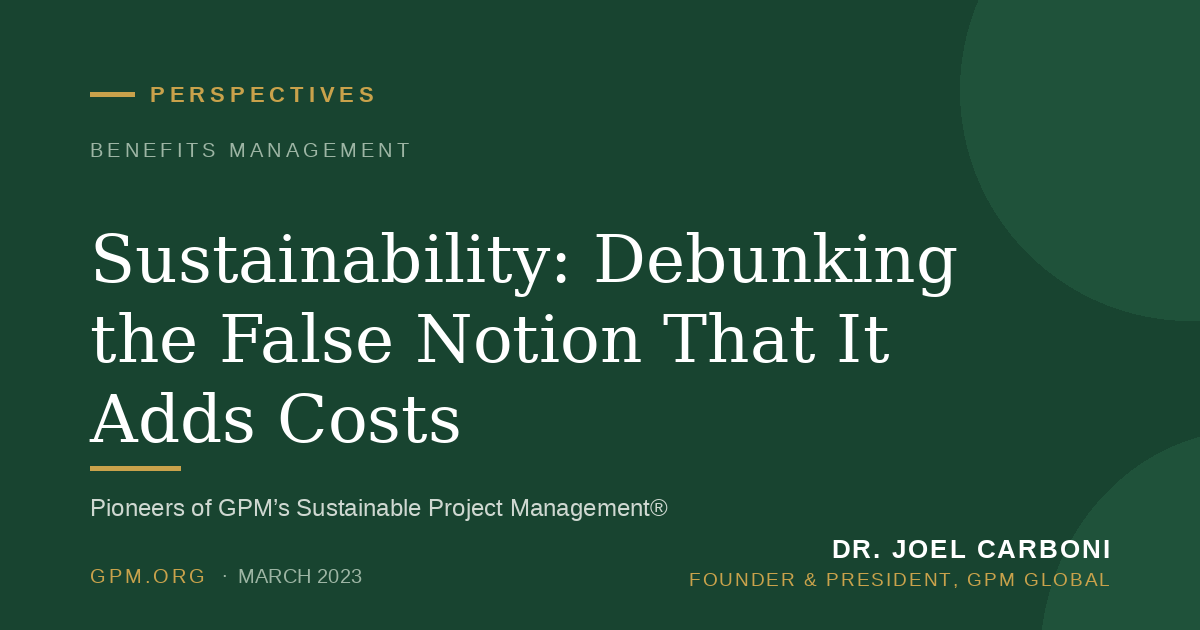
Sustainability is swiftly turning into a game-changer in the business world. As stakeholder expectations grow, rules tighten, and value shifts towards sustainable markets, it's clear that businesses need to adapt. While some executives recognize sustainability as a driver for business transformation, they often view it as a threat to profitability. This mindset leads to a focus on short-term financial results rather than long-term sustainable growth.
This view creates hurdles in integrating environmental and social impact into business decisions. As a result, sustainability is often tacked on instead of being woven into the organization's fabric. But is it true that chasing sustainability means giving up profitability? Or is this just a myth? Do leaders really need to toss out the traditional business model to make sustainability a viable strategy?
The truth is, profitability and sustainability aren't as opposed as they seem. In fact, evidence shows that sustainable practices can boost a company's long-term financial health. By embracing sustainability, companies can become more efficient, use fewer resources, and spur innovation, giving them an edge in sustainable markets.
Instead of discarding the traditional business model, leaders can evolve it to include sustainability. By changing how they measure success, they can weave environmental and social impact into their key performance indicators and business goals. This shift aligns the pursuit of profits with responsible, sustainable practices.
To do this, companies need to stop seeing sustainability as a separate initiative. Instead, they should embed it deeply within their culture and strategy. Leaders need to understand that sustainability isn't just a box to tick to please stakeholders. It's a crucial part of a resilient, forward-thinking business model.
By integrating sustainability in a meaningful, systematic way, companies can create long-term value and strengthen their position in a growing sustainability-focused market. This requires a change in mindset, a commitment to transparency, and collaboration with stakeholders at all levels.
Business leaders around the globe now accept that sustainability isn't optional—it's essential. A staggering 98% of CEOs now see their role in steering their businesses towards greater sustainability, up from 83% ten years ago.
However, many executives worry that pursuing sustainability could harm profitability. According to a previous study by Accenture, 58% of the 1,496 executives surveyed believe sustainability conflicts with growth.
But is this worry founded, or is it a misconception? Despite the common belief in a trade-off, many companies are embracing sustainability without sacrificing profits. Current trends show that 63% of CEOs are launching new sustainable products and services, and 43% are moving towards circular business models.
Some industries, like automotive, have made strides responding to stricter regulations and government incentives. But overall, adoption of sustainable business models isn't keeping pace with what the world needs or what stakeholders demand. For instance, the NYU Stern Sustainable Market Share Index™ reports that products marketed as sustainable grew 7.3% from 2015 to 2021, compared to 2.8% for other products. Yet, sustainable products still make up only 17% of the total market.
The conversation about the challenges of sustainability transformation raises the question: are these obstacles real or just perceived myths? Future leaders often worry about the costs, complexity, impracticality, unreliability, and slowness of becoming a sustainable business. However, closer examination and testing with 280 senior business executives reveal that cost and complexity are more linked to standard business practices, making them favorable winds for sustainable transformation.
The idea that profitability and sustainability are at odds is a myth. Companies can align their financial success with their sustainable impact by adopting responsible practices, making sustainability a core part of their strategy, and seizing opportunities in a world where sustainability is a driving force for change. By doing this, businesses can succeed today and build a better future for everyone.

Making projects sustainable on a global scale since 2009.
© 2009–2026 GPM Global. All rights reserved.
GPM®, Green Project Management®, and Sustainable Project Management® are registered trademarks of GPM Ltd. PRiSM™, the PMI-GPM P5™ Standard for Sustainability in Project Management, the PMI-GPM Practice Guide for Sustainability in Project Management, CSPP™ (formerly GPM-b™), CSPMs™, CSPMx™, CSP™, CSF™, Certified Sustainable Project Manager (Expert)™, GPM360°™, GPM360°™, and PSM3™ are trademarks of GPM Global and the PMI-GPM Joint Venture as applicable. Use requires written consent.


